
Meet PhD-Student Ali Al-Mousawi
Ali Al-Mousawi
MD, PhD-Student
Grønbæk Group: Professor Kirsten Grønbæk.
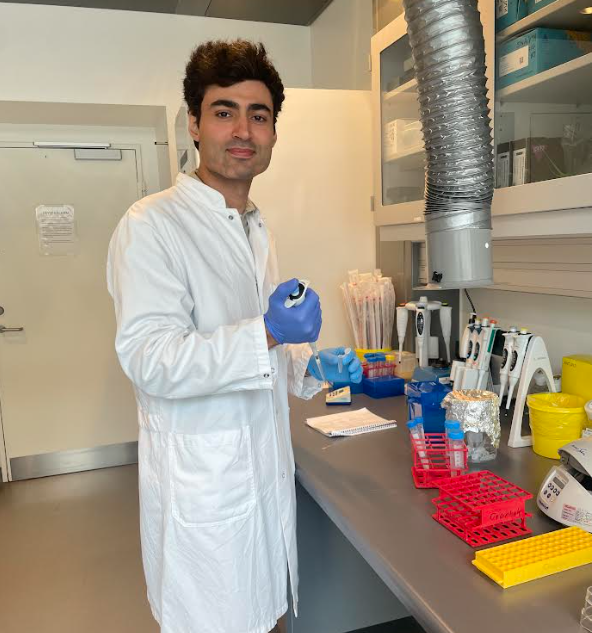
What is your PhD project about?
In my PhD project I will characterize T cells and Natural Killer (NK) cells in patients with myelodysplastic neoplasms (MDS) and the precursor condition ‘clonal cytopenia of undetermined significance’ (CCUS). These immune cells are crucial for detecting and eliminating cancer cells, but their function is often impaired in many cancers. MDS is a type of blood cancer with genetic abnormalities in hematopoietic stem cells and a dysfunctional immune system, changes also observed in CCUS.
The project builds on our completed randomized clinical trial, EVI-2, where patients with lower-risk MDS (LR-MDS) and CCUS received daily oral vitamin C or placebo for 12 months. The study showed fewer severe infections, improved survival, and modulation of immune-related inflammatory markers in the vitamin C group, forming the basis for my hypothesis that the observed clinical benefits are due to vitamin C’s molecular effects on the immune system.
To study T and NK cells, I use frozen patient blood samples from EVI-2 collected before and after treatment, which allows me to assess vitamin C’s biological impact on these cells. I am currently investigating whether the genetic mutations previously identified in EVI-2 patients’ hematopoietic stem cells are also present in T and NK cells from pre-treatment blood samples. The dynamics of these mutations and potential effects of vitamin C will be further analyzed in post-treatment samples. Functional significance will be explored using flow cytometry, RNA sequencing (to assess gene expression), and DNA methylation analyses (to study gene regulation). These advanced molecular studies are conducted in collaboration with leading national and international researchers.
Overall, my PhD project aims to provide a detailed characterization of T and NK cells in LR-MDS and CCUS and to determine how oral vitamin C supplementation affects these key immune cells in early disease stages in patients. Linking molecular changes to existing clinical data from EVI-2 may reveal whether the observed clinical benefits of vitamin C are related to changes in immune cell composition and function.
What does it mean to be part of a CAG?
Being part of the CAG for Translational Hematology is special for me as a PhD student, as I get the opportunity to work in an interdisciplinary environment where clinicians and basic researchers collaborate closely to understand and improve the treatment of blood diseases. It gives me unique insight into how research can be translated into concrete clinical significance, and how results from the laboratory can make a difference for patients.
As a PhD student, it is a great advantage to be part of a network where I can discuss with experienced researchers and clinicians. It provides both professional inspiration, new collaboration opportunities and a feeling of being part of a larger community that works to elevate translational hematology research.